Views: 57 Author: Lestov Publish Time: 14-07-2020 Origin: Site


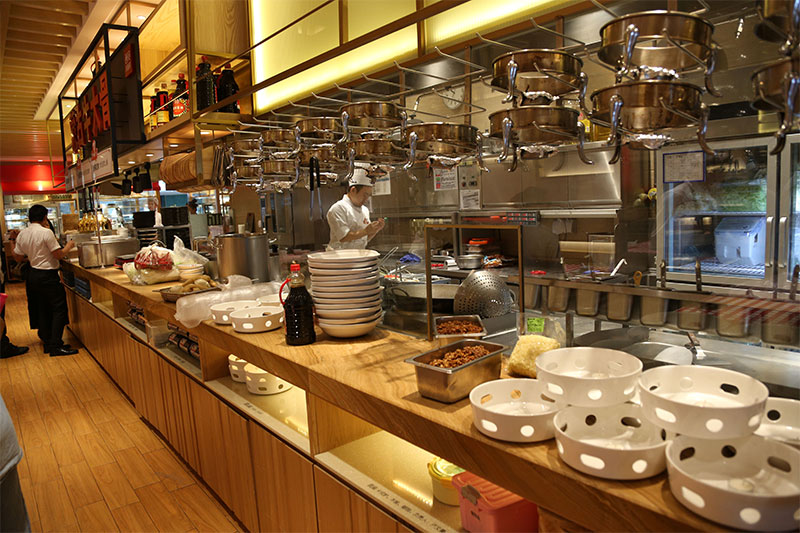
The commercial induction cooker originated in Japanese commercial cooking equipment in the ’70s, was developed in Germany, and soon became popular in the European market.
Commercial induction manufacturers have been steadily developing and mastering the induction technology in the commercial kitchen equipment market for nearly two decades.
Moreover, the commercial induction market’s potential should not be underestimated, with the rapid growth of the hospitality industry and the annual increase in market shares.
According to the current foreseeable market environment and recent induction market research, the global induction market has more than 3 million units, with the Chinese market capturing 600,000 units alone and demonstrating a promising trend.

From the beginning of 2017, China has clearly required all types of industries to develop in line with the conservation of resources and the protection of the environment, to improve energy use efficiency and ameliorate the ecological environment.
In China, the concept of low-carbon environmental protection has been gradually improved. The low-carbon economy has developed steadily for three years, upgraded kitchen equipment, has also been no fire, no heat radiation, no smoke, no ash, no pollution, no rise in room temperature, and other requirements.
The growth volume of commercial induction cookers in the European market has reached its peak. However, with the recent Brexit, the rest of the EU members are experiencing economic regression with shrinkage in the hospitality industry.
Most importantly, eastern diets are generally richer than western diets. Hence, German manufacturers are monopolizing the commercial induction cookers range below 8KW, and priced expensively in a niche market.
Chinese commercial induction market has reached its maturity stage with two decades of steady development and has completely penetrated local diets, from stir fry, steam, hard boil, deep fry, and other cooking styles.
Moreover, commercial induction cookers' power output can range from 3KW to 30KW and have other extensions on various commercial kitchen equipment. Similar to Lestov’s self-developed commercial kitchen equipment.

Lestov started from commercial induction cookers, then proceeded to commercial induction hobs, commercial automatic pasta boilers, commercial induction griddles, commercial induction steamers, and more. Lestov prioritizes flame-less cooking, fuel storage free, and implementing induction heating.
Moreover, thermal efficiency converts up to 90% and provides an efficient, energy-saving, and safe cooking environment. The automatic pasta boiler might be the most well-known induction cooker to the general public; they are frequently located in many franchise convenience stores.
Additionally, commercial induction cookers have multiple branches and extensions in diversified commercial kitchen equipment used in western and eastern fast-food chains, hotpot restaurants, hotels, motels, including trains, cruise ships, enterprises, government canteens, the food processing industry, and more.
Commercial kitchen equipment offers many enterprises with efficient energy-saving resources, aligning with the low-carbon economy, and pursuing steady development.
According to a recent statistic, the Chinese commercial kitchen equipment market was at 11.1 billion Yuan in 2007, later reached 42.5 billion yuan at the beginning of 2015, and the market share further increased to 78.2 billion yuan by 2018.
Notably, the commercial kitchen equipment has already established a 100 billion yuan market in 2020. Hence, commercial induction cooking equipment will be the mainstream demand in the future.
How Commercial Induction Cooking is Shaping the Catering Industry?
Buy commercial fryers: how to choose the sizes?
Why do we use a high-power induction cooker?


